
Nobel Prize 2025 in Physiology or Medicine: Unlocking the Secrets of Immune Tolerance
The immune system is one of nature’s most complex and powerful defense mechanisms. It protects us from infections, cancer cells, and harmful invaders. Yet, this very system can sometimes turn against the body, attacking healthy tissues and causing diseases like diabetes, multiple sclerosis, or lupus.
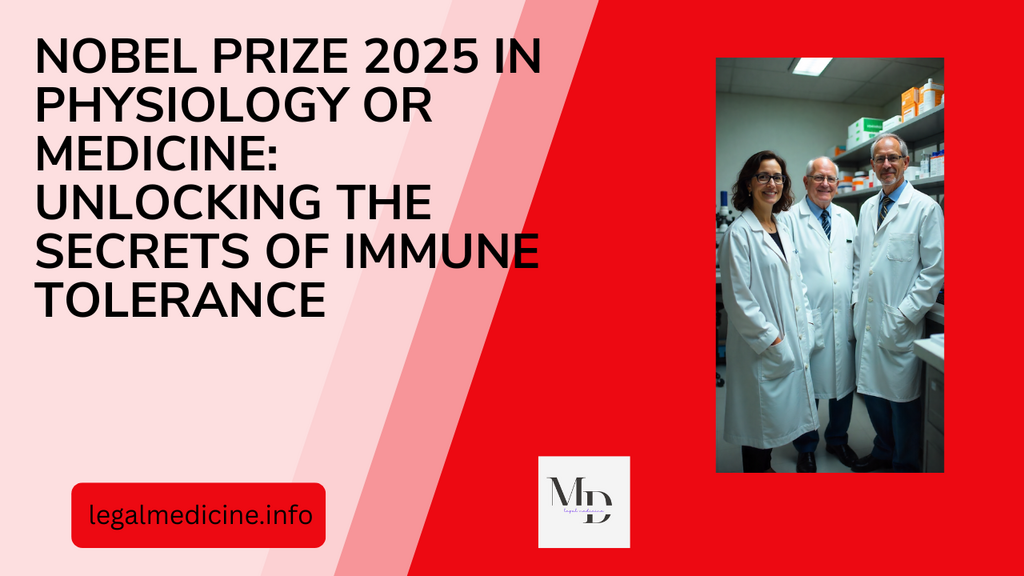
This year’s Nobel Prize in Physiology or Medicine (2025) honors three pioneering scientists — Mary E. Brunkow, Fred Ramsdell, and Shimon Sakaguchi — for their groundbreaking discoveries in immune regulation. Their work on peripheral immune tolerance revealed how the immune system distinguishes between “self” and “non-self,” preventing it from attacking the body’s own organs.
Their discoveries have opened new horizons in autoimmune disease therapy, cancer treatment, and organ transplantation, revolutionizing modern immunology.
Introducing the Laureates
Mary E. Brunkow
Dr. Mary E. Brunkow, a molecular immunologist, began her scientific career studying genetic mutations related to immune system malfunction. She is best known for identifying the FOXP3 gene, a master regulator of immune tolerance. Her discovery explained a long-standing mystery about why some people develop severe autoimmune diseases early in life.
Working at Amgen and in collaboration with other research groups, Brunkow helped identify how mutations in FOXP3 lead to a rare but fatal disorder — IPEX syndrome (Immune Dysregulation, Polyendocrinopathy, Enteropathy, X-linked syndrome). This discovery laid the groundwork for understanding regulatory T cells (Tregs), which play a central role in controlling immune balance.
Fred Ramsdell
Dr. Fred Ramsdell, an immunologist with extensive experience in both academic and industry research, independently discovered the same FOXP3 gene around the same time as Brunkow. His work confirmed that FOXP3 is the genetic “on switch” for regulatory T cells, the immune system’s peacekeepers.
Ramsdell’s research unified genetic, cellular, and clinical observations into a coherent framework, proving that when FOXP3 fails, immune self-control collapses — leading to widespread autoimmunity. His studies provided essential insights that guided the development of new immunotherapies and tolerance-inducing drugs.
Shimon Sakaguchi
Professor Shimon Sakaguchi, from Kyoto University in Japan, first identified regulatory T cells (Tregs) in the 1990s. His groundbreaking experiments showed that these specialized immune cells prevent excessive immune reactions and maintain tolerance to self-antigens.
Sakaguchi’s pioneering research revealed that when Tregs are absent or malfunctioning, the immune system attacks the body’s own organs, resulting in autoimmune diseases. His findings transformed immunology and launched a new field focused on immune regulation and tolerance therapy.
Together, these three scientists discovered and defined the molecular and cellular basis of peripheral immune tolerance — how the body’s immune defenses are restrained from self-destruction.
Understanding the Winning Discovery: Peripheral Immune Tolerance
What Is Immune Tolerance?
The immune system’s main job is to recognize and eliminate harmful invaders such as viruses, bacteria, and cancer cells. But it must also recognize what not to attack — the body’s own tissues.
This ability to discriminate between self and non-self is called immune tolerance.
- Central tolerance develops in the thymus, where immune cells that attack the body are destroyed early.
- Peripheral tolerance occurs outside the thymus, ensuring that any escaped self-reactive immune cells are kept under control.
The Nobel-winning discoveries revealed the mechanisms behind peripheral immune tolerance, focusing on the crucial role of regulatory T cells (Tregs) and the FOXP3 gene.
Regulatory T Cells: The Immune System’s Peacekeepers
Tregs act like the brakes of the immune system. They suppress overactive immune responses, ensuring that the body does not attack itself.
Sakaguchi’s research showed that Tregs produce specific proteins that calm other immune cells like T-helper cells and cytotoxic T cells. Without these regulators, immune responses spiral out of control, leading to tissue damage and chronic inflammation.
The FOXP3 Gene: Master Controller of Immune Tolerance
The discoveries by Brunkow and Ramsdell identified FOXP3 as the genetic master switch that programs T cells to become regulatory T cells.
When FOXP3 is defective:
- Tregs fail to develop properly.
- The immune system becomes hyperactive.
- Autoimmune diseases such as type 1 diabetes, thyroiditis, and dermatitis emerge.
This genetic insight provided the molecular key to understanding how immune tolerance is maintained — and what happens when it fails.
How the Discoveries Were Made
The path to the Nobel Prize involved decades of meticulous research combining genetics, immunology, and clinical medicine.
- Early Clues from Autoimmune Diseases
In the 1980s and 1990s, scientists studying mice with autoimmune symptoms noticed the absence of a specific immune cell population. Sakaguchi identified these as regulatory T cells that prevent self-attack. - Genetic Breakthrough
In 2001, Brunkow and Ramsdell independently pinpointed the FOXP3 gene as the crucial factor for Treg development. They discovered that patients with IPEX syndrome, a rare and fatal autoimmune condition in infants, had mutations in this gene. - Functional Proof
Experiments confirmed that without FOXP3, regulatory T cells could not form, leading to uncontrolled immune reactions. Restoring FOXP3 in immune cells restored tolerance. - Clinical Impact
These findings connected genetic, cellular, and clinical evidence, establishing a new understanding of immune self-regulation.
From Discovery to Application: The Impact on Medicine
The laureates’ discoveries have transformed both basic immunology and clinical medicine.
1. Autoimmune Diseases
Understanding how Tregs maintain self-tolerance has led to new strategies to treat autoimmune diseases like:
- Type 1 diabetes
- Multiple sclerosis
- Rheumatoid arthritis
- Lupus erythematosus
Therapies now aim to boost or restore Treg function to calm the immune system and prevent self-destruction.
2. Cancer Immunotherapy
Ironically, the same immune tolerance that protects us from autoimmunity can allow cancer cells to evade detection. By suppressing Tregs in tumors, scientists can reactivate the immune system to attack cancer cells.
This approach has already inspired novel immunotherapies that enhance the effectiveness of checkpoint inhibitors — drugs that block cancer’s immune escape mechanisms.
3. Organ Transplantation
One of the biggest challenges in organ transplants is immune rejection. Treg-based therapies offer the potential to induce immune tolerance to donor organs, reducing or even eliminating the need for lifelong immunosuppressants.
4. Allergy and Inflammation Control
By modulating Treg activity, researchers are exploring treatments for allergies, asthma, and chronic inflammatory disorders, providing a gentler alternative to traditional immunosuppressive drugs.
A New Era in Immunology
The discoveries of Brunkow, Ramsdell, and Sakaguchi have redefined how medicine understands and controls immunity. Their work bridges molecular genetics and clinical application, leading to the creation of:
- Treg-based cell therapies
- Gene therapy trials for FOXP3 restoration
- Precision immunotherapies for autoimmunity and cancer
This research has sparked a global movement toward immune modulation — not simply turning immunity “on or off,” but fine-tuning it for balance and health.
The Broader Implications
Beyond treating disease, this discovery reshapes how scientists think about the immune system:
- It reveals that health is not just about immune strength, but about immune balance.
- It shows how subtle genetic variations can lead to devastating illnesses.
- It provides a blueprint for developing therapies that restore harmony rather than suppression.
In many ways, the discovery of peripheral immune tolerance mirrors how nature itself maintains equilibrium — through balance, not brute force.
Frequently Asked Questions (FAQs)
1. What is the Nobel Prize 2025 in Physiology or Medicine awarded for?
It was awarded to Mary E. Brunkow, Fred Ramsdell, and Shimon Sakaguchi for discovering how the immune system prevents itself from attacking the body — a process known as peripheral immune tolerance.
2. What are regulatory T cells (Tregs)?
They are a special type of immune cell that suppress overactive immune responses and maintain tolerance to self-antigens, preventing autoimmune diseases.
3. What is the role of the FOXP3 gene?
FOXP3 is the master regulator that turns normal T cells into regulatory T cells. Mutations in this gene cause immune system failure and severe autoimmune disorders.
4. How does this discovery affect cancer research?
By understanding how immune tolerance works, researchers can design therapies that lift immune suppression in tumors, enabling the body to attack cancer cells more effectively.
5. Will these findings lead to new treatments soon?
Yes. Clinical trials are already testing Treg-enhancing and FOXP3-based therapies for autoimmune diseases and transplant tolerance, marking the beginning of a new era in personalized immunotherapy.
Conclusion:
Thanks to Brunkow, Ramsdell, and Sakaguchi, we now understand that the immune system is not merely a weapon — it is a finely tuned orchestra. Its ability to distinguish between self and non-self, attack and protect, is what sustains health.
Their discoveries have laid the foundation for therapies that restore immune balance, offering new hope to millions suffering from autoimmune diseases, cancer, and transplant complications.
As science continues to explore the mysteries of immunity, one thing is clear: the path to healing often lies not in fighting harder — but in understanding balance more deeply.